
Medically reviewed by: Tim Stoddart, Clinical Director at Cedar Point Mental Health, where he leads evidence-based mental health and dual diagnosis treatment programmes. Working alongside licensed clinicians and behavioural health professionals, he helps develop patient-focused resources covering mental health, addiction recovery, trauma-informed care, and long-term wellness.
Quick Answer
A personality disorder is more than simply having a “difficult personality.” Mental health professionals diagnose personality disorders when long-standing patterns of thinking, emotional responses, and behaviors become inflexible, cause significant distress, impair daily functioning, and negatively affect relationships, work, or overall quality of life.
The earlier a personality disorder is recognized and treated, the better the long-term outcome. Evidence consistently shows that therapies such as Dialectical Behavior Therapy (DBT), Cognitive Behavioral Therapy (CBT), and individualized psychotherapy can significantly reduce symptoms, improve emotional regulation, and help individuals build healthier relationships.
Many People Ask Themselves…
- “Am I just emotional, or is something more serious going on?”
- “Why do my relationships always seem to fall apart?”
- “Is this normal behavior, or could it be a personality disorder?”
- “Can personality disorders actually be treated?”
- “How do I know when it’s time to seek professional help?”
These questions are more common than many people realize.
Every day, individuals across Utah, Arizona, Idaho, and Nevada struggle with persistent emotional patterns that interfere with their relationships, careers, education, and overall well-being. Unfortunately, many assume these challenges are simply “part of who they are.”
That misunderstanding often delays treatment for years.
What Is a Personality Disorder?
A personality disorder is a mental health condition characterized by long-term patterns of thoughts, emotions, and behaviors that differ significantly from cultural expectations and create ongoing problems in everyday life.
Unlike temporary mood changes caused by stress, grief, or major life events, personality disorders involve enduring behavioral patterns that usually begin during adolescence or early adulthood and persist over time without appropriate treatment.
These patterns may affect:
- Emotional regulation
- Decision-making
- Self-image
- Trust
- Relationships
- Communication
- Impulse control
- Work performance
The key distinction is that these behaviors are persistent, inflexible, and disruptive, rather than occasional reactions to difficult circumstances.
Personality Traits vs. Personality Disorder
Many people have strong personality traits. Being introverted, perfectionistic, independent, or emotionally expressive does not automatically indicate a personality disorder.
The difference lies in severity, consistency, and impact on daily functioning.
| Healthy Personality Traits | Possible Personality Disorder Symptoms |
| Occasional mood swings | Extreme emotional instability that affects daily life |
| Prefers solitude | Persistent social withdrawal with impaired relationships |
| Enjoys routines | Rigid behaviors causing distress when disrupted |
| Sometimes distrustful | Constant suspicion without evidence |
| Fear of rejection | Intense fear leading to unstable relationships or impulsive behaviors |
Medical experts emphasize that diagnosis depends on clinical evaluation—not online quizzes or self-diagnosis.
Why Early Recognition Matters
One of the biggest misconceptions surrounding personality disorders is the belief that “people never change.”
Research tells a different story.
With appropriate treatment, many individuals experience significant improvements in emotional regulation, interpersonal functioning, and overall quality of life.
The challenge is that symptoms often develop gradually, making them difficult for individuals and families to recognize until serious consequences begin affecting work, education, marriages, or physical health.
Common outcomes of untreated personality disorders may include:
- Relationship breakdowns
- Chronic conflict within families
- Difficulty maintaining employment
- Increased anxiety or depression
- Higher rates of substance misuse
- Financial instability
- Social isolation
- Increased risk of self-harm in certain personality disorders
Early intervention is associated with better long-term recovery and improved functioning across multiple areas of life.
When Does a Personality Become a Disorder?
Mental health professionals generally look for three important factors.
1. The Patterns Are Long-Term
The behaviors have existed for years—not weeks.
2. The Behaviors Occur Across Different Situations
Symptoms affect multiple parts of life, including:
- Home
- Relationships
- School
- College
- Workplace
- Friendships
3. Daily Life Is Being Affected
This may include:
- Losing relationships repeatedly
- Constant interpersonal conflict
- Difficulty controlling emotions
- Impulsive decisions
- Feeling empty or disconnected
- Trouble maintaining employment
- Persistent problems with trust or intimacy
If these patterns consistently interfere with everyday functioning, a comprehensive mental health assessment is recommended rather than assuming they are simply personality quirks.
Timeline: How Personality Disorder Symptoms May Progress Without Treatment
| Stage | What May Happen |
| Early Teens | Emotional sensitivity or behavioral differences begin to emerge. |
| Late Teens | Relationship conflicts, impulsive behaviors, or emotional instability become more noticeable. |
| Early Adulthood | Symptoms begin affecting education, employment, and independence. |
| Mid-Adulthood | Chronic relationship difficulties, anxiety, depression, or substance use may develop alongside untreated symptoms. |
| With Professional Treatment | Emotional regulation, healthier relationships, improved coping skills, and greater long-term stability become increasingly achievable. |
Important: Not everyone follows the same path. Early evaluation and individualized treatment can significantly change this trajectory.
A Real-Life Example
Consider a young professional who repeatedly loses jobs—not because of poor skills, but because intense emotional reactions lead to conflicts with coworkers and supervisors. At the same time, friendships often end abruptly after misunderstandings, and romantic relationships cycle between idealization and withdrawal.
Without understanding the underlying cause, they may blame themselves or believe that “this is just my personality.”
A comprehensive evaluation may reveal an underlying personality disorder, allowing them to access evidence-based therapies that teach emotional regulation, communication skills, and healthier coping strategies.
Recognizing the pattern is often the first step toward meaningful recovery—not a label that defines a person.
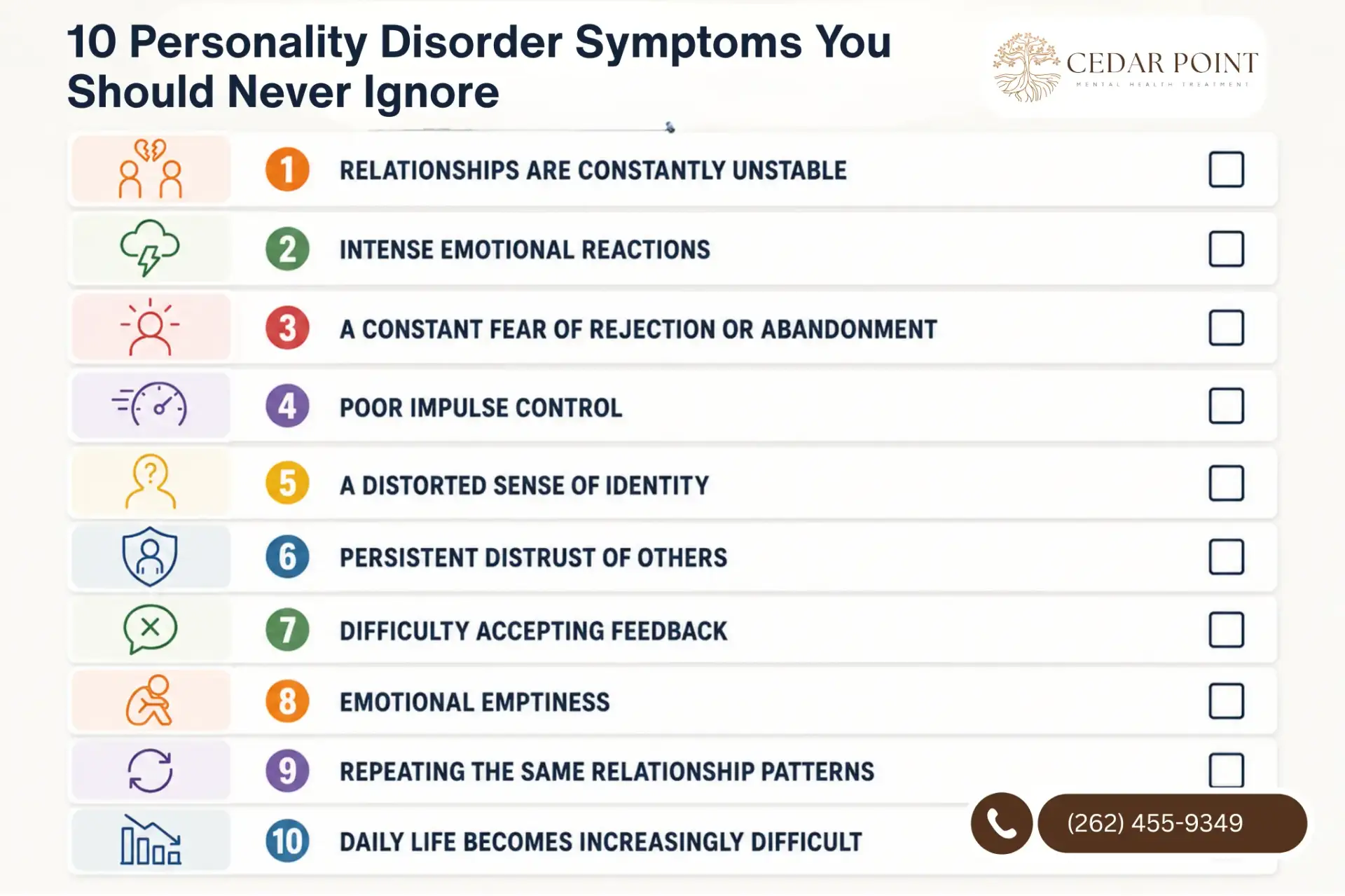
10 Personality Disorder Symptoms You Should Never Ignore
Everyone experiences emotional ups and downs. However, personality disorder symptoms are persistent, inflexible, and affect multiple areas of life over a long period of time.
If several of the following symptoms consistently occur together and interfere with relationships, work, school, or daily functioning, professional evaluation is recommended.
1. Relationships Are Constantly Unstable
One of the earliest and most common warning signs is a pattern of unstable personal relationships.
Someone may:
- Frequently argue with loved ones
- Quickly switch from idealizing someone to feeling betrayed by them
- End friendships impulsively
- Experience repeated breakups
- Have difficulty trusting others
While every relationship has challenges, a lifelong pattern of unstable relationships often indicates something deeper than ordinary conflict.
2. Intense Emotional Reactions
Many personality disorders involve significant difficulty regulating emotions.
This may include:
- Extreme anger
- Sudden mood shifts
- Feeling emotionally overwhelmed
- Persistent irritability
- Emotional reactions that seem much stronger than the situation warrants
Research consistently shows that difficulty with emotional regulation is one of the strongest treatment targets in therapies such as Dialectical Behavior Therapy (DBT).
3. A Constant Fear of Rejection or Abandonment
Some individuals experience overwhelming anxiety that people will leave them.
This can lead to:
- Clinging behaviors
- Reassurance seeking
- Jealousy
- Emotional outbursts
- Difficulty maintaining healthy boundaries
These reactions are often driven by intense emotional pain rather than a conscious choice.
4. Poor Impulse Control
Impulsive behavior can appear in many different ways.
Examples include:
- Reckless spending
- Dangerous driving
- Substance misuse
- Risky sexual behavior
- Gambling
- Quitting jobs without planning
- Sudden life decisions
Impulsivity becomes clinically significant when it repeatedly causes harm to the person’s health, finances, relationships, or future.
5. A Distorted Sense of Identity
Many people occasionally question who they are or what they want.
However, personality disorders may involve:
- Constantly changing goals
- Feeling empty
- Lack of personal identity
- Difficulty understanding one’s own values
- Feeling disconnected from oneself
These symptoms often contribute to depression and anxiety as well.
6. Persistent Distrust of Others
Some individuals consistently believe that others intend to harm, deceive, or manipulate them—even when there is little evidence.
This can result in:
- Social isolation
- Conflict
- Difficulty maintaining employment
- Relationship breakdowns
Persistent distrust differs significantly from normal caution or healthy skepticism.
7. Difficulty Accepting Feedback
Constructive criticism may trigger:
- Anger
- Withdrawal
- Defensiveness
- Shame
- Blaming others
Instead of viewing feedback as an opportunity for growth, it may feel like a personal attack.
8. Emotional Emptiness
Some individuals describe feeling:
- Emotionally numb
- Empty
- Disconnected
- Like something is missing
This feeling may persist for months or years despite changes in life circumstances.
9. Repeating the Same Relationship Patterns
A common question therapists hear is:
“Why do I keep ending up in the same unhealthy relationships?”
When similar relationship problems repeat across friendships, family, romantic partners, and workplaces, the issue may involve long-standing behavioral patterns rather than bad luck.
10. Daily Life Becomes Increasingly Difficult
Perhaps the biggest warning sign is functional impairment.
Ask yourself:
- Is work becoming harder?
- Are relationships consistently failing?
- Do emotional reactions feel impossible to control?
- Has anxiety or depression become overwhelming?
- Are family members expressing concern?
If the answer is yes, it may be time to seek a comprehensive mental health evaluation.
Quick Self-Reflection Checklist
While this is not a diagnostic tool, it can help identify whether professional evaluation may be appropriate.
| Question | Often | Sometimes | Rarely |
| My relationships are unstable. | ☐ | ☐ | ☐ |
| My emotions feel difficult to control. | ☐ | ☐ | ☐ |
| I fear people will leave me. | ☐ | ☐ | ☐ |
| I often act impulsively. | ☐ | ☐ | ☐ |
| I struggle with my identity. | ☐ | ☐ | ☐ |
| These problems affect work or school. | ☐ | ☐ | ☐ |
| Family members have expressed concern. | ☐ | ☐ | ☐ |
If several of these statements describe your experience, consider scheduling a professional mental health assessment rather than trying to manage these challenges alone.
How Mental Health Professionals Diagnose Personality Disorders
One of the biggest misconceptions online is that personality disorders can be identified through short quizzes or social media content.
That is not how diagnosis works.
A licensed psychiatrist, psychologist, or other qualified mental health professional will conduct a thorough evaluation that typically includes:
Clinical Interview
A detailed discussion about:
- Emotional experiences
- Relationships
- Childhood history
- Family history
- Daily functioning
- Previous mental health treatment
Psychological Assessment
Depending on the situation, clinicians may use validated psychological assessments to better understand personality patterns and rule out other conditions.
Review of Medical History
Some medical conditions, neurological disorders, or substance use can produce symptoms that resemble personality disorders.
A comprehensive assessment helps ensure an accurate diagnosis.
DSM-5-TR Diagnostic Criteria
Mental health professionals compare symptoms against the diagnostic criteria outlined in the Diagnostic and Statistical Manual of Mental Disorders (DSM-5-TR).
Diagnosis requires that symptoms are persistent, impair functioning, and cannot be better explained by another condition.
Different Personality Disorders Present Differently
Many people assume all personality disorders are the same.
In reality, they involve very different patterns of thinking, feeling, and behaving.
| Personality Disorder | Common Characteristics |
| Borderline Personality Disorder | Emotional instability, fear of abandonment, impulsivity |
| Narcissistic Personality Disorder | Grandiosity, need for admiration, difficulty with empathy |
| Avoidant Personality Disorder | Social inhibition, fear of criticism, low self-esteem |
| Obsessive-Compulsive Personality Disorder | Perfectionism, rigidity, need for control |
| Dependent Personality Disorder | Difficulty making decisions independently, fear of separation |
| Paranoid Personality Disorder | Persistent distrust and suspicion |
| Schizoid Personality Disorder | Detachment from relationships, limited emotional expression |
| Histrionic Personality Disorder | Attention-seeking behaviors, excessive emotionality |
| Antisocial Personality Disorder | Disregard for others’ rights, impulsivity, rule-breaking |
Understanding these differences is essential because effective treatment plans vary depending on the diagnosis and the individual’s specific needs.
Why Early Treatment Matters
One of the most encouraging findings from decades of mental health research is that personality disorders are treatable.
Early intervention can help individuals:
- Develop healthier coping strategies
- Improve emotional regulation
- Build stronger relationships
- Reduce impulsive behaviors
- Improve work and academic performance
- Decrease co-occurring anxiety or depression
- Enhance overall quality of life
Cedar Point Mental Health helps provide a wide range of treatments to help with Personality disorder problems.
Studies have shown that structured psychotherapies—particularly Dialectical Behavior Therapy (DBT)—can significantly reduce emotional distress and improve long-term functioning for many individuals with personality disorders.
Can Personality Disorders Be Treated?
One of the most harmful myths surrounding personality disorders is that “people can’t change.”
The reality is very different.
Over the past two decades, research has consistently shown that people living with personality disorders can make meaningful and lasting improvements with evidence-based treatment. While personality disorders are often long-term conditions, many individuals experience significant improvements in emotional regulation, relationships, daily functioning, and overall quality of life through comprehensive mental health care.
Recovery doesn’t necessarily mean symptoms disappear overnight—it means learning healthier ways to manage emotions, build stronger relationships, and regain control over daily life.
The earlier treatment begins, the greater the opportunity to reduce complications and improve long-term outcomes.
What Does Effective Personality Disorder Treatment Look Like?
No two people experience personality disorders in exactly the same way. That is why treatment should never follow a one-size-fits-all approach.
Instead, clinicians develop personalized treatment plans after a comprehensive psychiatric evaluation.
Common Evidence-Based Treatment Options
| Treatment | Primary Goal | Best For |
| Dialectical Behavior Therapy (DBT) | Improve emotional regulation, reduce impulsivity, strengthen relationships | Borderline Personality Disorder and emotional dysregulation |
| Cognitive Behavioral Therapy (CBT) | Identify and change unhealthy thought patterns | Anxiety, depression, avoidant personality traits |
| Individual Psychotherapy | Address underlying emotional and behavioral patterns | Most personality disorders |
| Trauma-Informed Therapy | Process unresolved trauma that may contribute to symptoms | Individuals with trauma histories |
| Family Therapy | Improve communication, education, and family support | Families and caregivers |
| Medication Management | Treat co-occurring anxiety, depression, mood symptoms, or sleep disturbances | When clinically appropriate |
Important: There is no medication approved to “cure” personality disorders. However, medications may help manage co-occurring mental health conditions such as anxiety, depression, insomnia, or mood instability when recommended by a psychiatrist.
What Happens During Treatment?
Many people delay seeking care because they imagine treatment will involve years of simply “talking about childhood.”
Modern personality disorder treatment is far more practical and skills-focused.
A comprehensive program often includes:
- Comprehensive psychiatric evaluation
- Individual therapy
- Skills-based therapies like DBT
- Cognitive restructuring
- Emotional regulation training
- Stress management
- Mindfulness techniques
- Family education and involvement
- Relapse prevention planning
- Ongoing progress monitoring
The goal is not to change someone’s personality—it is to help them respond to life’s challenges in healthier, more effective ways.
Recovery Timeline: What to Expect
Recovery is different for everyone, but understanding the general process can help set realistic expectations.
| Timeframe | What Many Individuals Experience |
| Weeks 1–4 | Comprehensive assessment, diagnosis (if appropriate), establishing treatment goals, beginning therapy |
| Months 2–3 | Improved emotional awareness, learning coping skills, identifying unhealthy patterns |
| Months 3–6 | Better emotional regulation, stronger communication skills, healthier relationships begin developing |
| 6–12 Months | Continued progress, greater confidence managing triggers, improved daily functioning |
| Long-Term | Ongoing personal growth, stronger resilience, healthier relationships, sustained recovery strategies |
Recovery is rarely a straight line. Some weeks may feel easier than others, but consistent participation in treatment often leads to meaningful progress over time.
Real-Life Use Cases: When Professional Treatment Can Help
Use Case 1: The Professional Facing Repeated Workplace Conflict
A marketing executive consistently excels technically but struggles with intense reactions to criticism. Frequent disagreements with coworkers have resulted in multiple job changes.
After a comprehensive mental health evaluation, they begin evidence-based therapy focused on emotional regulation and interpersonal effectiveness. Over time, workplace relationships improve, and career stability increases.
Use Case 2: The College Student Experiencing Emotional Instability
A university student frequently experiences overwhelming emotions, unstable friendships, and impulsive decisions that interfere with academics.
Through structured therapy, they learn coping strategies, improve emotional awareness, and regain confidence in managing relationships and school responsibilities.
Use Case 3: Families Looking for Answers
Parents notice their adult child cycles through intense relationships, emotional outbursts, and prolonged feelings of emptiness. After years of uncertainty, the family encourages a professional assessment.
With appropriate treatment and family involvement, communication improves, conflicts decrease, and everyone gains a better understanding of the condition.
When Should You Reach Out for Help?
Seeking help is not a sign that something is “wrong” with you—it is a proactive step toward understanding what you are experiencing.
Consider scheduling a professional evaluation if:
- Your emotions regularly feel overwhelming or difficult to manage.
- Relationships repeatedly become unstable or conflict-filled.
- Daily functioning at work, school, or home is being affected.
- Friends or family have expressed concern about your emotional or behavioral patterns.
- Anxiety, depression, or substance use are occurring alongside these challenges.
- You feel stuck in patterns that seem impossible to change on your own.
Early intervention often leads to better outcomes than waiting until symptoms become more severe.
Compassionate Personality Disorder Treatment Across Utah, Arizona, Idaho, and Nevada
Finding the right mental health provider is an important part of recovery.
Whether you are seeking help for yourself or supporting someone you love, accessing evidence-based treatment close to home can make the process more manageable.
Cedar Point Mental Health provides comprehensive evaluations and personalized treatment planning for individuals experiencing symptoms associated with personality disorders throughout:
- Utah
- Arizona
- Idaho
- Nevada
Treatment plans are tailored to each person’s unique diagnosis, strengths, challenges, and long-term recovery goals. Depending on clinical needs, care may include individual therapy, DBT-informed approaches, family support, and ongoing psychiatric services.
Frequently Asked Questions (FAQs)
Q. Can personality disorders be cured?
Personality disorders are generally considered long-term mental health conditions, but they are treatable. Many people experience substantial improvement through evidence-based therapies, developing healthier coping strategies and stronger relationships over time.
Q. What is the most effective therapy for personality disorders?
The best therapy depends on the specific diagnosis and individual needs. Dialectical Behavior Therapy (DBT) has strong evidence for treating Borderline Personality Disorder, while CBT, trauma-informed therapy, and other psychotherapies are effective for many personality disorders.
Q. Can someone with a personality disorder live a normal life?
Yes. With appropriate treatment, many individuals successfully maintain careers, healthy relationships, pursue education, and enjoy meaningful, fulfilling lives.
Q. Can personality disorders get worse without treatment?
They can. Without professional support, persistent symptoms may contribute to relationship difficulties, emotional distress, workplace challenges, anxiety, depression, or substance use. Early treatment can reduce these risks.
Q. How do I know if I need a professional evaluation?
If emotional or behavioral patterns consistently interfere with your relationships, work, education, or daily functioning, scheduling a comprehensive mental health assessment is recommended rather than relying on self-diagnosis.
Final Thoughts
Personality disorders are often misunderstood, but they are not personal failures or character flaws. They are recognized mental health conditions that deserve compassionate, evidence-based care.
Recognizing persistent personality disorder symptoms is not about labeling yourself—it is about understanding why certain patterns continue to affect your life and discovering that change is possible.
The sooner someone receives an accurate diagnosis and personalized treatment, the greater the opportunity to build healthier relationships, strengthen emotional resilience, and improve overall quality of life.
If you or someone you care about has been struggling with long-standing emotional or interpersonal challenges, you don’t have to navigate them alone. A comprehensive mental health evaluation can provide clarity, direction, and a treatment plan tailored to your needs.
Contact Cedar Point Mental Health Today Call: (262) 455-9349 & Verify Insurance